About
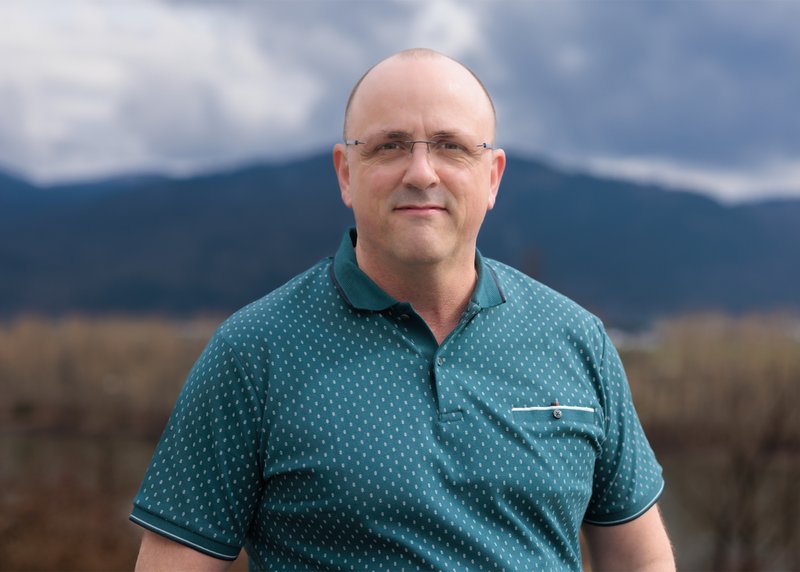
I've spent 25 years inside high-stakes care — and my whole career on the two things that make it hold.
One is psychological health and safety: the condition the people doing the work actually live in. The other is the operational system underneath them — the part that decides whether the care holds on a hard night or quietly comes apart. I've worked on both for a long time, in places where the cost of getting it wrong is a person.
One practice, not two careers
For more than 25 years I've led teams in healthcare, social services, and industrial operations — places where a missed handoff, a skipped step, or an exhausted staff member isn't a paperwork problem. I've sat with leaders carrying the whole operation in their head at 11pm. And I've done the psychological-health-and-safety work with the people on the floor who absorb the hardest parts of the day.
Psychological health and safety has always been the through-line. It's the why. I became an AI expert specifically because it's finally the how — the practical way to take this from a value people believe in to something that actually runs inside an organization, every shift, at every site. That's not two careers stacked together. It's one integrated practice: the human standard, and the system that can finally carry it.
Why high-stakes care providers, specifically
The organizations I build for are mission-driven and built around human trust. Their people carry an enormous load on behalf of children, patients, and people in crisis. In almost every one, the care is good — often extraordinary. The gap is the system underneath it: the reporting, the onboarding, the consistency across sites, the safe way to use the tools your staff are already reaching for.
So that's what I build — the system underneath the care — so the people doing the work are protected and the care holds even when leadership is stretched and the floor, program, or home is short-staffed.
What I believe
Exhausted people don't need more change pushed at them. They've had enough of that. What they need are conditions that make the right work easier — where the safe path is also the simple path, and doing it correctly doesn't cost them their last bit of capacity.
That's the whole point of bringing AI into this. Technology should take load off people, not add another thing to manage. When the system handles the documentation, the reporting, the in-the-moment "what's our policy on this," your staff get back the one thing the work actually depends on: being present with the person in front of them. The technology is never the point. The people are.
There's a deeper reason I do this work, the way I do it, with these people — it comes from my own life. Read why →
Education & credentials




Credentials & track record
The background underneath the work.
My training spans leadership, organizational systems, and trauma-informed practice — graduate work at Royal Roads, University of Fredericton, and SFU; an MTHS Certified Trauma-Informed Coach credential; ICF Professional Certified Coach (PCC); and Certified Transformational Presence Coach. A deliberate mix — this work lives at the intersection of people and the systems that hold them.
The numbers come from doing the work — including one healthcare engagement where PHS practice moved absenteeism from 8.4% to 2.1%. That's what the right conditions do for a team.
Organizations and projects Trace has worked with





















"Trace has an ability to see the bigger picture and how psychological safety affects every aspect of our working lives — he also brings strategic thinking and creative solutions to support wellness for all."
"At Fraser Health, Trace facilitated a meaningful session on Psychological Health and Safety. He had people's attention from the beginning. His wisdom, experience, and deep listening shone through."
Start here
It starts with a conversation.
No pitch, no cost — 45 minutes to get an honest look at where your organization is and what would actually help. If there's a fit, the first step is an honest assessment: interviews with your people, then a concrete report and a plan you can act on.
Book your free, confidential 45-minute conversationConfidential. 45 minutes. Virtual.